

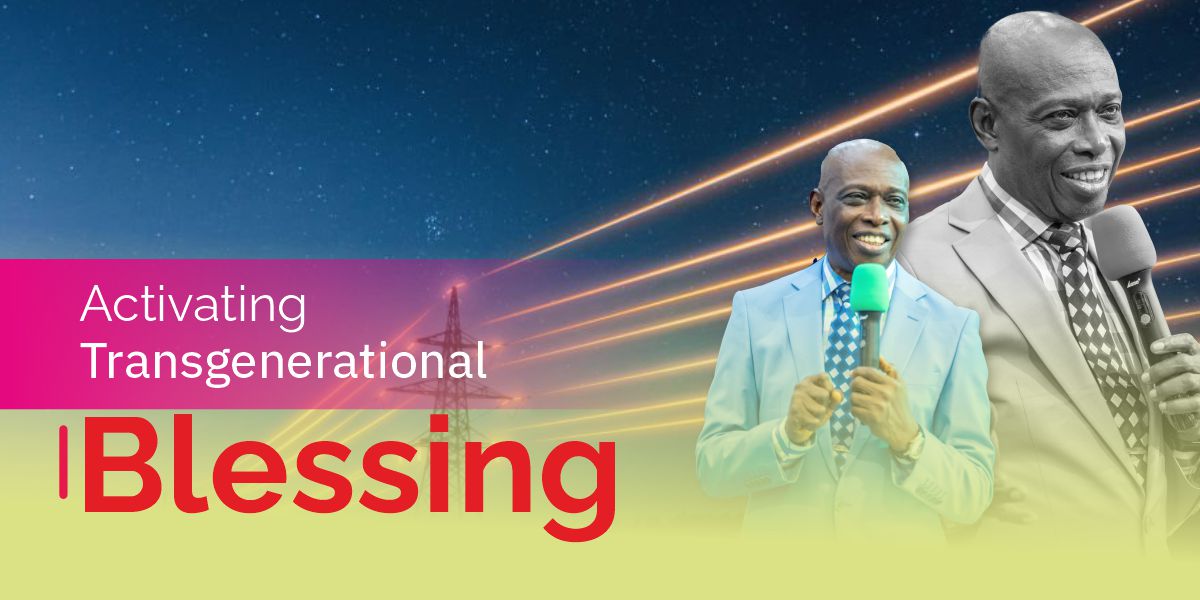
When God blesses someone, that blessing is not meant to stop with the individual. It is designed to flow to the generations that follow. God often thinks in terms of generations, not years. He blesses one person so that through them, nations and families will benefit. This is the essence of a transgenerational blessing.
A transgenerational blessing is a divine flow that includes covenant preservation, favor, and divine remembrance. It moves from one generation to another, outliving the person who first received it. Abraham received such a blessing when God said, “In you shall all the families of the earth be blessed” (Genesis 12:3). This blessing was a seed meant to reproduce grace across time.
The blessing continued from Abraham through Isaac and Jacob, and ultimately through their descendants to Christ. Matthew 1:17 highlights this continuity: “So all the generations from Abraham to David are fourteen generations, from David until the carrying away into Babylon are fourteen generations, and from the carrying away into Babylon unto Christ are fourteen generations.” This was a divinely ordered blessing sustained through history.
The First Generational Blessing – Abraham (Genesis 12:1–3)
The journey began with Abraham. God called him out of his father’s house, saying, “Go to a land that I will show you, and I will make you a great nation.” Abraham’s obedience became the starting point for this generational transfer. His faithfulness established a covenant line through which Heaven would reach his descendants. God affirmed, “I will bless you and make your name great,” embedding continuity within the covenant.
Abraham built altars wherever he went. Each altar represented submission and remembrance. These became landmarks of the ongoing covenant. When you walk faithfully with God, you prepare the way for your children.
Abraham and the Confirmation of the Covenant
Abraham’s greatest test came when God asked him to sacrifice Isaac. His readiness to obey revealed his faith, and God’s provision was revealed in the ram caught in the thicket. Abraham offered the ram and named the place Jehovah Jireh, meaning “The Lord will provide.” This event took place on Mount Moriah, later known as Mount Calvary, where God provided Himself through Jesus Christ, the Lamb slain from the foundation of the world. Abraham’s declaration, “The Lord will provide Himself a lamb,” was prophetic.
God confirmed the covenant, saying, “By Myself have I sworn... Because you have done this and have not withheld your only son, in blessing I will bless you, and in multiplying I will multiply your seed... Your seed shall possess the gate of their enemies, and in your seed shall all the nations of the earth be blessed because you have obeyed My voice.” This sealed the covenant and activated the transgenerational blessing through Abraham’s obedience.
The Second Generational Blessing – Isaac (Genesis 26:1–5)
The blessing flowed to Isaac. God appeared to him and said, “I will be with you and bless you, for unto you and your seed I will perform the oath which I swore unto Abraham your father.”
During a famine, Isaac obeyed God’s instruction to stay in Gerar instead of going to Egypt. He sowed in that land and reaped a hundredfold. His obedience sustained the covenant in his generation. Obeying God in hard times upholds the legacy built by those before us. Isaac’s life shows that obedience keeps the covenant alive.
The Third Generational Blessing – Jacob to Christ (Genesis 28:10–15, Matthew 1:17, John 2:1–11)
Jacob encountered God in a dream at Bethel. He saw a ladder reaching to heaven, and God said, “I am the Lord God of Abraham your father and the God of Isaac. The land where you lie, to you will I give it, and to your seed.” Jacob responded by building an altar, marking his personal encounter with God.
Abraham represented faith, Isaac obedience, and Jacob encounter. Every generation needs its own meeting with God. The blessing continued through Jacob’s sons, Israel, David, and finally Christ, as shown in Matthew 1:17. The covenant grace flowed without interruption, finding its fulfillment in Jesus. Galatians 3:29 confirms, “If you belong to Christ, then you are Abraham’s seed, and heirs according to the promise.”
At the wedding in Cana (John 2:1–11), this principle of obedience brought blessing. When the wine ran out, Mary told the servants, “Whatever He tells you to do, do it.” They obeyed, filling the waterpots as Jesus said, and water became wine. When obedience meets divine instruction, miracles happen. The same pattern of obedience from Abraham is fulfilled in Christ’s commands.
Sustaining the Blessing
Transgenerational blessings continue only through active participation. God establishes them through covenant, but humans sustain them through faith, obedience, and discipline.
1. Keep the Covenant Alive
God works through covenant, and covenants require faithfulness. Abraham maintained fellowship through altars; we do so through devotion, prayer, and obedience to God’s word. Faithfulness ensures God’s consistency (Psalm 89:34).
Example: Joshua renewed the covenant before his death to ensure continuity (Joshua 24:25).
2. Walk in Obedience
Each generation must obey God. Isaac obeyed during famine, Jacob in exile, and the servants at Cana followed Jesus. Mary’s instruction remains true: “Whatever He tells you to do, do it.” Obedience sustains divine continuity. Saul lost the kingdom through disobedience; David secured it through obedience (1 Samuel 13:13–14).
3. Raise Family Altars
Maintain prayer, worship, and study of the word in your home. Family altars preserve divine connection. Abraham, Isaac, and Jacob all built altars (Genesis 12:8, 26:25, 35:7).
Example: When Elijah repaired the broken altar, fire fell (1 Kings 18:30–39). Repairing family altars restores God’s presence.
4. Teach Your Children
Pass on spiritual truths to sustain blessings. Abraham was chosen because he would teach his household (Genesis 18:19). Proverbs 22:6 says, “Train up a child in the way he should go.”
Example: Timothy’s faith came from his mother and grandmother (2 Timothy 1:5). Their teaching strengthened his calling.
5. Live in Integrity
Righteousness preserves inheritance. Proverbs 13:22 says, “A good man leaves an inheritance to his children’s children.” Psalm 112:2 adds, “The generation of the upright shall be blessed.”
Example: Joseph’s integrity in Egypt preserved his family during famine. Discipline and integrity protect future generations.
The blessing given to Abraham flows through Christ to all believers. You stand in that lineage by faith. Live as a covenant carrier. Walk in obedience. Teach your family. Maintain prayer. Uphold integrity. The same God who kept His promise through generations will keep His word in your life and for those who come after you.
Genesis 12:1–3, Genesis 22:13–14, Genesis 22:15–18, Genesis 26:1–5, Genesis 26:12, Genesis 28:10–15, Matthew 1:17, John 2:1–11, Galatians 3:29, Psalm 89:34, Joshua 24:25, 1 Samuel 13:13–14, Genesis 12:8, Genesis 26:25, Genesis 35:7, 1 Kings 18:30–39, Genesis 18:19, Proverbs 22:6, 2 Timothy 1:5, Proverbs 13:22, Psalm 112:2




 +234903222664